 English
 Spanish
 French
 German
 Italian
 Chinese (Simplified)
 Japanese
 Korean
 Arabic
 Portuguese


BRASS 3D Printer Insert
Product Details:
- Size MULTI
- Material BRASS
- Product Type BRASS 3D Printer Insert
- Type Brass 3D Printer Insert
- CNC Machining Yes
- Diameter 3 mm to 8 mm (custom available)
- Tolerance 0.05 mm
- Click to View more
BRASS 3D Printer Insert Price And Quantity
- 1150.0 INR/Kilograms
- 1000 Kilograms
BRASS 3D Printer Insert Product Specifications
- BRASS
- Brass 3D Printer Insert
- 0.05 mm
- BRASS 3D Printer Insert
- Yes
- MULTI
- Other
- Other
- 3 mm to 8 mm (custom available)
- Up to 300C
- 3D printing, prototyping, industrial and mechanical use
- Polished
- Fittings in thermoplastic 3D printed parts
- Yes
- Varies as per model (standard 6 mm to 20 mm)
- Heat-set, ultrasonic or press-fit
- High quality brass
- Metric/Imperial or as required
- Gold (Brass Natural Finish)
BRASS 3D Printer Insert Trade Information
- Cash in Advance (CID)
- 5000 Kilograms Per Month
- 2 Week
- Sample costs shipping and taxes has to be paid by the buyer
- Central America, Eastern Europe, North America, South America, Western Europe, Middle East, Africa, Asia, Australia
- All India
Product Description
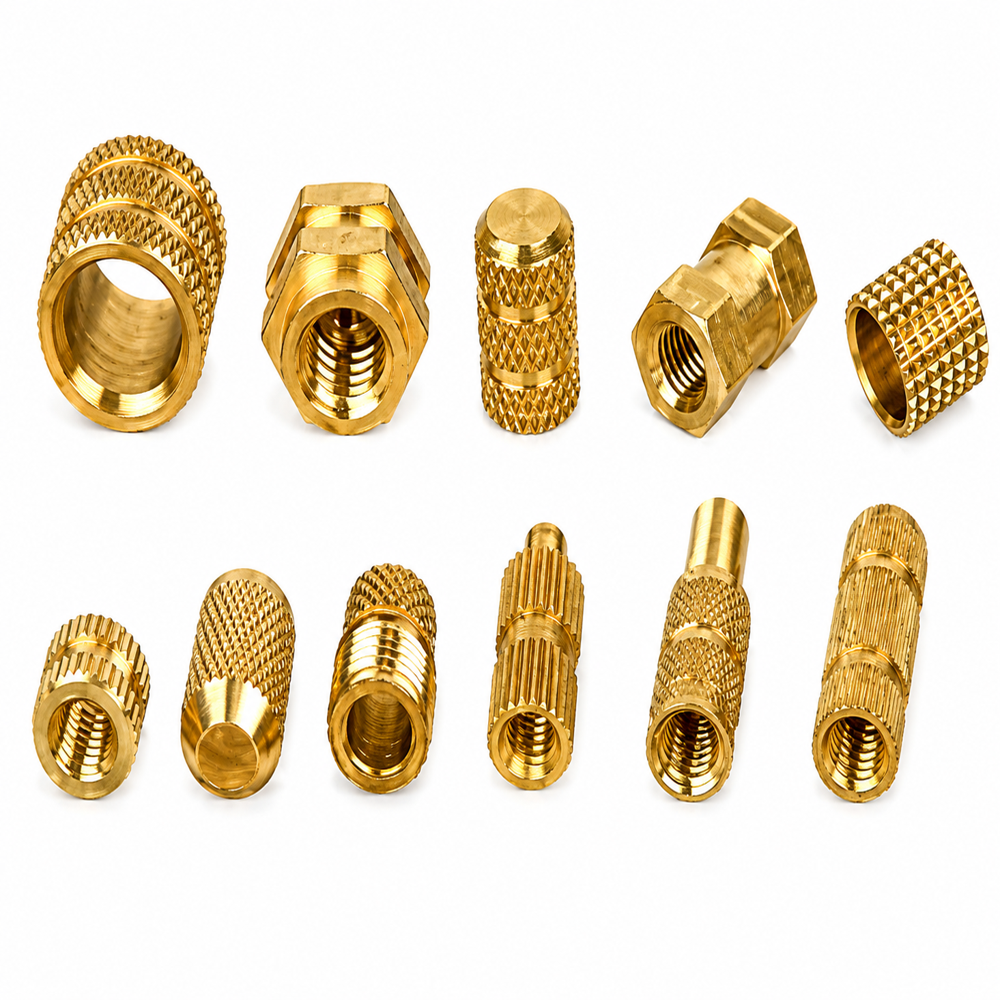
Brass 3D printer inserts, often referred to as heat-set inserts, are specialized threaded components designed to be permanently embedded into 3D-printed parts. While standard 3D prints are prone to "stripping" when screws are driven directly into the plastic, these brass inserts provide a durable, metallic thread that allows for repeated assembly and high mechanical loads.
Technical Design and Function
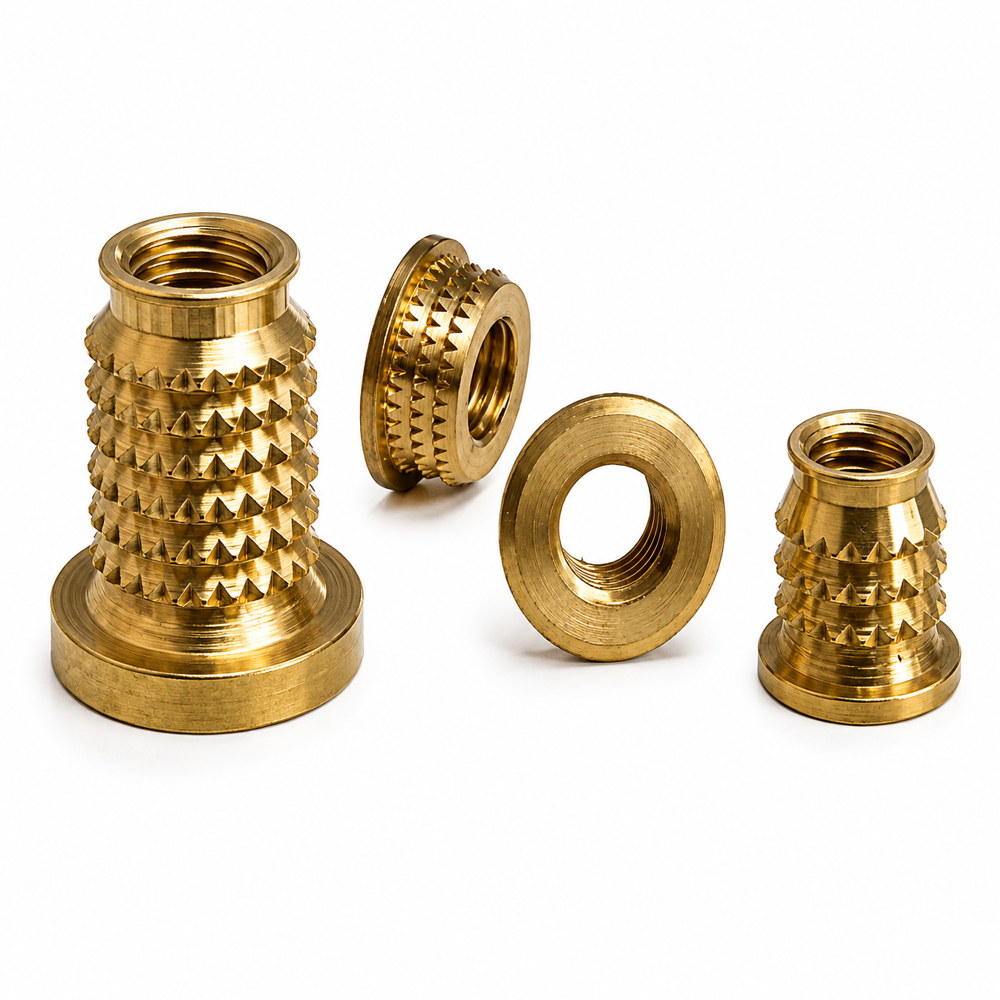
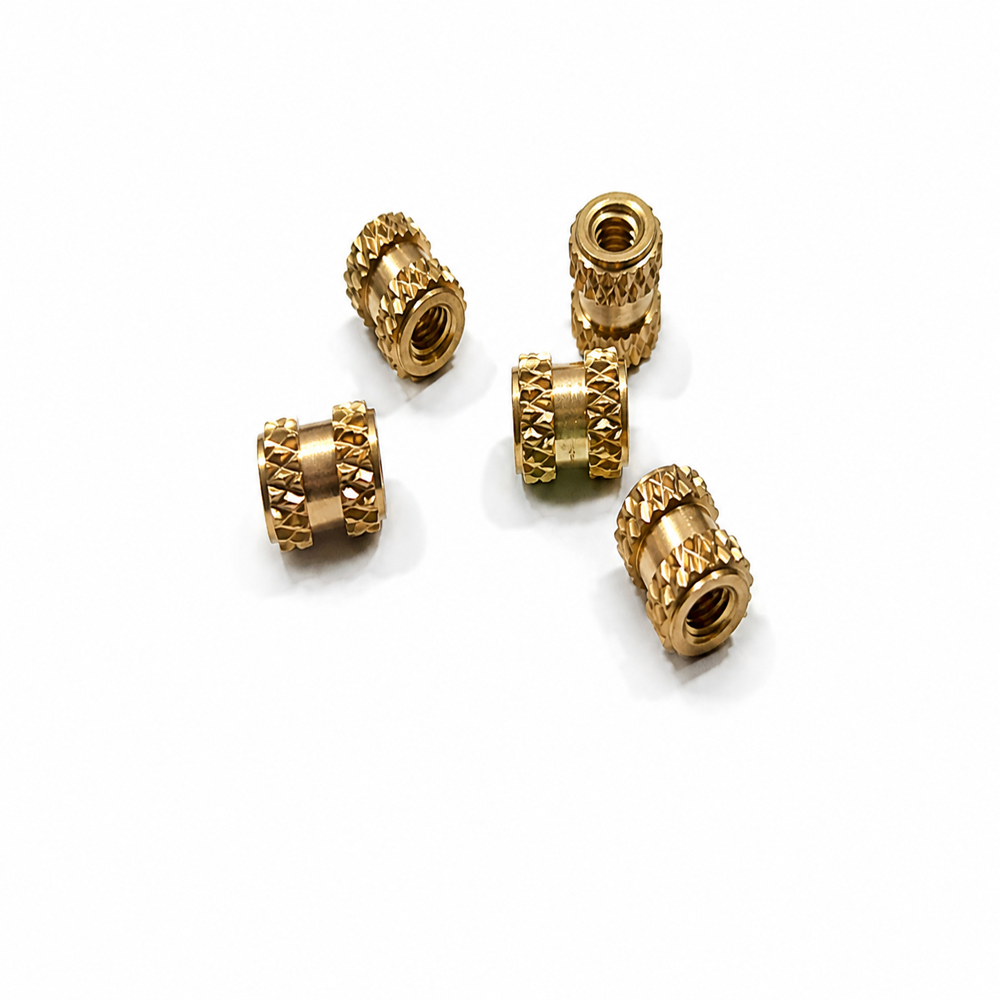
Most 3D printing inserts feature a tapered design and a knurled exterior. The knurlingusually a diagonal or "opposed" patternis critical. As the insert is pressed into the plastic, these ridges create a massive amount of surface area and mechanical interlocking, which prevents the insert from rotating (torque-out) or being pulled out of the part.
Thermal Installation
The primary method for installing these in 3D prints (like PLA, PETG, or ABS) is thermal stacking:
-
A hole is designed into the 3D model slightly smaller than the insert's diameter.
-
A soldering iron, often fitted with a specialized "heat-set tip," is used to heat the brass.
-
As the brass reaches the plastic's melting point, it sinks into the part.
-
The displaced plastic flows into the knurls and solidifies, "welding" the metal to the plastic.
Why Brass?
-
Thermal Conductivity: Brass transfers heat rapidly from the soldering iron to the plastic, ensuring a clean, quick melt without scorching the surrounding material.
-
Precision: CNC-machined brass provides much tighter tolerances than a 3D printer can achieve alone.
-
Longevity: Unlike plastic threads, brass threads do not wear down or cross-thread easily, making them ideal for enclosures or functional prototypes that need to be opened and closed frequently.
These inserts are a standard choice for engineering-grade 3D prints, transforming brittle plastic parts into functional, industrial-strength components.
Precision Engineered for 3D Printing Applications
These brass inserts are meticulously crafted to deliver robust, precise threads for plastic components produced through 3D printing. Their superior tolerance of 0.05 mm and temperature resistance up to 300C ensure they stand up to the rigors of prototyping, industrial production, and repeated mechanical use. Each insert is polished for an excellent surface finish and enduring gold-colored appearance.
Ease of Installation Across Multiple Methods
Whether you prefer heat-set, ultrasonic, or press-fit installation, these inserts are adaptable for various workflow requirements. Their compatibility with multiple thread types and tolerances enables seamless integration into different project specifications, making them a reliable choice for manufacturers, exporters, and suppliers in the 3D printing arena.
FAQ's of BRASS 3D Printer Insert:
Q: How are BRASS 3D Printer Inserts installed in thermoplastic parts?
A: BRASS 3D Printer Inserts can be installed using heat-set, ultrasonic, or press-fit methods, depending on your equipment and material. Heat-setting involves slightly melting the plastic for a secure fit, while ultrasonic and press-fit techniques use vibration or direct force, respectively.Q: What thread types are available for these brass inserts?
A: These inserts are produced in both metric and imperial thread types. Custom threading can also be arranged to suit specific application requirements in prototyping or industrial projects.Q: When should I use brass inserts in 3D printed assemblies?
A: Brass inserts are recommended when you need durable, reusable threads in plastic parts-especially where frequent assembly/disassembly is expected or higher mechanical strength is desired, such as in jigs, fixtures, and robotics.Q: Where can I use these brass 3D printer inserts?
A: They are suitable for use in a wide range of sectors, including 3D printing, prototyping, and various industrial and mechanical applications where secure fittings in thermoplastics are essential.Q: What is the advantage of using brass with a polished finish for inserts?
A: Brass offers excellent corrosion resistance, high temperature tolerance (up to 300C), and a robust, wear-resistant threading. The polished finish not only enhances appearance but also reduces friction, facilitating smoother installation and longer component lifespan.Q: Is it possible to get custom sizes or tolerances for these inserts?
A: Yes, custom diameters (from 3 mm to 8 mm or as required), lengths, and thread configurations are available. The typical manufacturing tolerance is 0.05 mm, ensuring precision fit for your specific applications.
Price:
- 50
- 100
- 200
- 250
- 500
- 1000+

Other Products in 'Brass Inserts/Nurrling Insert ' category



Contact Details
GST : 24ADNPD2847G1ZO
 Send Inquiry
 |
Narayan Components
All Rights Reserved.(Terms of Use) Developed and Managed by Infocom Network Private Limited. |
